Finding enough skilled workers to keep crews staffed and projects moving remains a persistent challenge for utility contractors. As experienced workers leave the industry and contractors compete for a limited pool of new talent, building a reliable workforce increasingly requires more than filling today’s open positions.
For contractors and industry leaders at The Utility Expo, that means looking further upstream — introducing younger people to utility construction, strengthening connections with career and technical education programs, identifying candidates with the right aptitude, and creating workplaces where new employees can develop into long-term professionals.
Stay up to date with Utility & Construction Trends and Technologies from The Utility Expo
Geoff Dodge, co-owner of Indianapolis-based Lamb Excavating, a sewer, water, septic, and storm contractor, has experienced that challenge firsthand. His approach starts by looking beyond an applicant's construction experience to identify people with the potential to become skilled utility workers.
“Critical thinking and problem solving are probably two of the most desirable skills we look for,” Dodge said. “We also like people who have hobbies or interests where they work with their hands.”
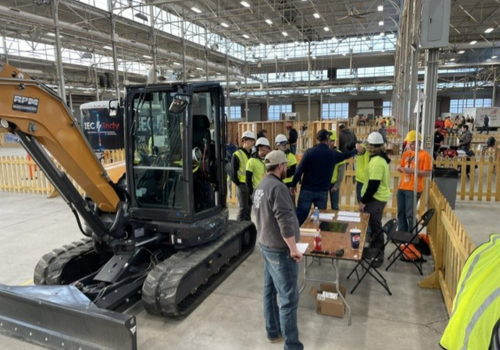
Image: A student operates a CASE excavator during the SkillsUSA Indiana State Leadership and Skills Conference civil construction and heavy equipment competition. Hands-on exercises give students experience operating construction equipment while demonstrating skills they can carry into the industry. Photo courtesy of Geoff Dodge.
Reach the Next Generation Earlier
The challenge becomes more difficult when too few young workers are entering the construction pipeline.
Dodge sees contractors competing for a relatively small group of students who have already chosen technical education and the skilled trades. By the time employers begin recruiting students approaching high school graduation, many of those career decisions have already been made.
“We need to sell our industry to young people before they make those decisions,” Dodge said.
That means reaching students years before they are ready to fill an open position — an investment that may not provide an immediate return. Dodge uses motorsports through Geoff Dodge Racing LLC as one tool to introduce elementary and middle school students to construction careers — drawing them in through their interests.
Dodge said the broader message extends beyond racing to the industry itself. Construction needs intelligent, high-performing people who can solve problems and build things that matter.
Build Stronger Connections With Technical Education
Career and technical education can help turn early exposure into a workforce pipeline, but Dodge says contractors need to participate rather than wait for graduates to come looking for jobs.
Dodge helped establish SkillsUSA Indiana’s heavy equipment and civil construction pathway, working with industry partners to develop training around skills employers need from prospective workers.
“We’ve learned young people want to know their work matters and that they can make a real difference in their communities,” Dodge said. “Working with cool tools is definitely an attraction as well.”
Involvement with an organization like SkillsUSA can extend well beyond recruiting. Dodge said manufacturers, equipment dealers, contractors, and other industry partners contribute equipment, facilities, volunteers, and expertise to SkillsUSA competitions. At the national level, he has watched competing manufacturers come together to support a relatively small group of students pursuing heavy equipment careers.
“To open the doors for your competition to come in and do something good for the future of our industry is inspiring to be a part of,” Dodge said.
After seeing a qualified Indiana student miss the national competition, Dodge and his partners also began covering the cost for Indiana’s winner to attend, removing a potential financial barrier between a student and the opportunity to compete nationally, meet industry professionals, and further explore a career in the industry.
Contractors don’t necessarily need to make that level of investment to participate. Dodge said companies can volunteer at SkillsUSA events, judge competitions, help with activities, develop exercises, or otherwise support existing programs.
“There are lots of ways to plug in and participate,” Dodge said. “The bonus is getting to meet students who have elected to explore our career pathway.”
Dodge said contractors looking to strengthen workforce-development efforts do not have to do it alone. Partnerships with contractors, equipment companies, industry organizations, and other supporters can provide resources, expertise, and opportunities to reach young people. His efforts have included support from Indiana 811, Ohio 811, Diamond Equipment, Dirt Perfect, and Drainage Solutions, illustrating how organizations across the industry can work together to help build the next generation of skilled workers.
Image: Students receive instructions for trenching and backfill exercises during the SkillsUSA Indiana State Leadership and Skills Conference civil construction and heavy equipment competition. Competitors used a Hyundai 145 excavator and Hyundai HT100 compact track loader to demonstrate precision, safety, speed, and efficiency. Photo courtesy of Geoff Dodge.
Give New Workers a Reason to Stay
Recruitment is only part of the workforce equation. Once someone enters the industry, contractors still have to create an environment where that employee can learn, contribute, and see a future.
Dodge said Lamb Excavating has found that workplace culture matters, particularly when developing younger employees.
“We’ve found that building a family atmosphere and recognizing that today’s young people don’t respond well to some of the training tactics employed in the industry in the past have contributed to retention,” Dodge said.
That includes moving away from an old-school mentality in which yelling, intimidation, and insults could be treated as part of learning the trade.
“Many people my age learned from the crusty old guard, but enduring that kind of treatment isn’t a rite of passage,” Dodge said.
Lamb Excavating also uses profit sharing to give employees what Dodge describes as “some skin in the game” and a greater sense of ownership in the company’s success.
There Is No Overnight Workforce Solution
For contractors struggling to fill positions today, Dodge doesn’t believe there is an untapped source of skilled workers waiting to be discovered.
“I’m not sure there’s a secret pot of gold out there,” Dodge said. “The reality is we just don’t have the numbers, so everywhere you look is going to be hotly contested.”
Instead, he sees workforce development as a long-term effort requiring contractors to get involved and continue showing up — through schools, technical education, industry organizations, training programs, and their own communities.
“At the most basic level, if contractors can’t immediately point to what they are doing to close the skilled trades gap, they are probably part of the problem,” Dodge said. “The great news is, it’s not too late to get plugged in and get started.”
Image: A new sanitary manhole is installed at an existing lateral connection serving an active cross-dock operation. Utility construction often requires crews to develop solutions that maintain service while minimizing disruptions for customers and other stakeholders. Photo courtesy of Geoff Dodge.
Build the Utility Workforce at The Utility Expo
Building the next generation of utility workers takes more than filling today’s open positions. Contractors also need opportunities to share knowledge, develop their teams, connect with industry peers, and explore the equipment and technologies shaping the skills their workforce will need in the years ahead.
The Utility Expo brings utility and construction professionals together for hands-on equipment demonstrations, industry education, and opportunities to learn about the workforce, safety, technology, and operational issues affecting the industry.
For contractors working to strengthen their workforce, the show provides a place to see how equipment and technology are changing the jobsite while connecting with the manufacturers, contractors, and industry professionals helping move utility construction forward.
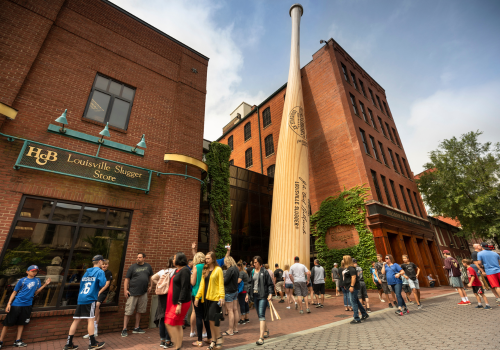
The Utility Expo returns Oct. 5-7, 2027, at the Kentucky Exposition Center in Louisville.
Learn more about The Utility Expo 2027 and sign up for Show Alerts
About The Utility Expo
The Utility Expo is the premier trade show for utility construction and infrastructure professionals working to build, maintain and modernize essential utility systems. The biennial event brings together contractors, utility owners and industry leaders for hands-on access to the latest equipment, tools, technologies and solutions serving transmission and distribution of all sources, water, wastewater, telecom and other critical utility markets. Known for equipment test drives and interactive product demonstrations, The Utility Expo will return to Louisville, Kentucky, October 5-7, 2027.
Read Next