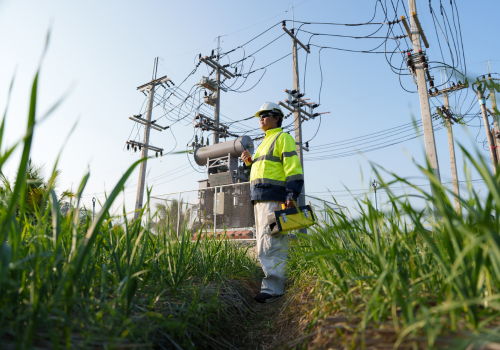

Utility distribution work has changed significantly in recent years, with portfolios now spanning feeder rebuilds, underground conversions, distribution substation upgrades, and battery storage installations, often layered into a multi-year program. Engineering design tolerances have tightened, and utilities are now able to watch asset performance data throughout the build. For asset managers inside construction companies, that shift means longer equipment lifetimes, higher-capability distribution equipment, and handoff expectations are higher than ever.
The companies handling this the best treat asset management as part of how a power distribution job gets executed, from mobilization to closeout.
Lifecycle and Risk (Beyond Installation)
Construction crews on distribution programs regularly work on assets at (or past) their original design life. Nationally, 55% of in-service distribution transformers are already more than 33 years old, against an expected lifespan of roughly 30 to 40 years, and that age profile is only part of what a feeder rebuild or underground conversion runs into. A feeder rebuild touches poles, conductor, and switchgear from another era. An underground conversion runs new conduit alongside infrastructure nobody has fully inspected in decades. Understanding the condition and risk profile of what's already in the ground or on the pole protects schedule, and it limits liability in ways that a pure installation mindset misses.
That expertise has to translate into a real decision framework, especially against a fixed outage window. The decision to refurbish or replace an asset is not appropriate for the field. Instead, it requires a detailed risk assessment conducted in advance, answering: what condition(s) triggers replacement regardless of cost, what condition allows refurbishment, and what the fallback looks like if a field crew opens an asset and finds damaged beyond their original assumption.
Waiting until the outage window is live to make that call carries a high opportunity cost.
A defensible asset condition record, captured before the scope starts, updated during the work, and finalized at closeout, is the difference between whether a contractor can answer a utility's question six months later.
Reliability Follows the Contractor
Utilities measure distribution reliability through metrics like System Average Interruption Duration Index (SAIDI) and System Average Interruption Frequency Index (SAIFI) where the national average customer outage now runs past 335 minutes a year, and construction work that touches those numbers gets traced back to the technician or crew who performed the work.
Monitoring installation quality and early performance while the work is still underway protects both the contractor's record and the relationship with the utility. A problem caught during construction is fixable; one logged against your work as an outage after the fact may show up in the next bid review.
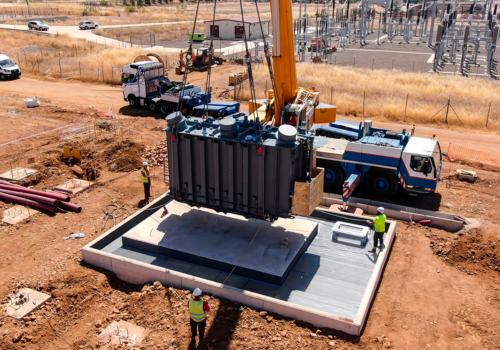
Installation standards matter most on the assets utilities scrutinize hardest at the distribution level: battery storage foundations, underground conduit, distribution substation structures. Contractors who build to a standard that holds up to that inspection (vs. adhering to code minimums only), are the ones with clean performance histories. And utilities awarding multi-year distribution framework agreements favor contractors whose work they don't have to think about again.
Maintenance Fluency as a Field Skill 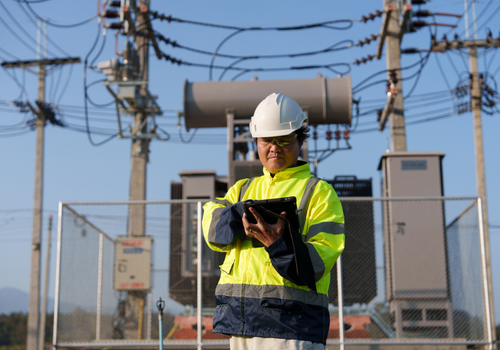
The shift from time-based to condition-based maintenance changes how construction companies plan field work, not just how utilities run their distribution assets after handoff. A crew that understands what condition-based monitoring will be watching on an asset they're installing makes different decisions during construction: where sensors go, how access is preserved for future inspection, what documentation the asset needs to support that monitoring from the install date. And monitoring is mattering more every year, as US battery storage capacity could roughly double to more than 40 gigawatts between 2023 and 2026, and every one of those facilities is a long-lived distribution asset that depends on the same condition-based monitoring discipline from day one.
That discipline carries through to closeout. Utilities expect handoff packages and as-built accuracy that match what they'll need to operate the asset for the next ~20 years. As a result, a missed preventive maintenance window on a multi-year program means waiting for the next planned outage, which can run months out. Building that fluency into crews as well as into the asset management department provides a competitive advantage that saves time and cost.
Connectivity as a Condition of the Work
Utilities increasingly expect real-time asset data during construction itself, not a report handed over once the job is completed. That expectation puts pressure on construction companies to understand the systems they're feeding data into, not just the equipment they're installing.
Supervisory Control and Data Acquisition (SCADA), advanced distribution management systems, and digital twin platforms are now standard parts of how utilities operate distribution assets. A contractor doesn't need to run those systems, but understanding how they collect and process data, what format they expect, and where a construction company's records need to line up with utility platforms prevents integration problems at handoff. Without that understanding, the utility team inherits a data cleanup problem that may require manual re-keying.
Field tools that capture condition and location data as the work happens, rather than relying on someone reconstructing it later, close the gap that produces as-built errors. That gap is where most documentation disputes start, and it's avoidable with the right tools used consistently in the field rather than as an afterthought.
Connectivity capability also changes how a utility sees the contractor. A company that can hand over clean, structured asset data that plugs directly into a utility's operating systems is functioning as a partner in that utility's asset management strategy, not just a vendor executing a scope. That distinction shows up in procurement decisions long before it appears in any formal scorecard.
Asset Management Done Well Is Invisible 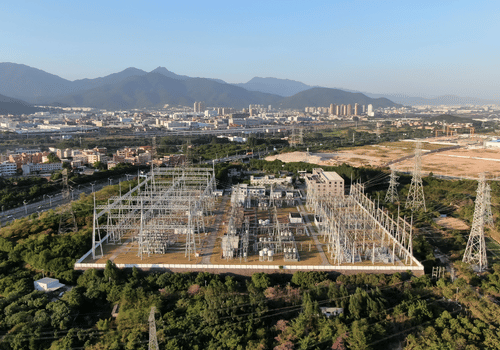
The goal of all of this is to avoid surprises during construction, transition clean closeouts, and deliver asset performance data that matches what was promised. Utilities don't call back the contractors who needed the most explaining. They call back the ones whose work they stopped thinking about the moment it was finished.
Distribution investment alone tells the scale of what's at stake. Investor-owned electric companies spent $60.2 billion on distribution in 2024, up from $56.7 billion the year before. As asset management practices continue to shift, this is exactly the kind of operational ground The Utility Expo's education sessions and exhibit floor are built to track, where contractors compare notes on what's working in the field. The contractors building a track record on the distribution side now are the ones positioned for the next multi-year program, and the one after that.
For fresh insights into the utility industry, along with trends, challenges, and shifts shaping utility work, subscribe to The Utility Expo Newsletter.