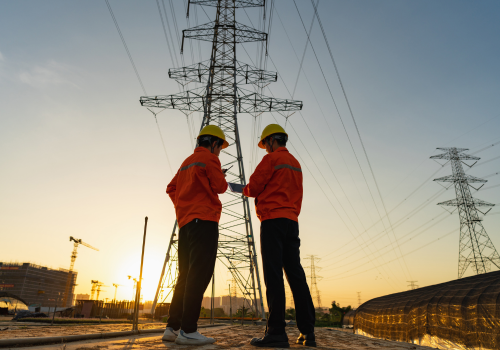
A $174 Billion Turning Point for the Grid
US electric utilities invested roughly $174-179 billion in 2024, an all-time high. Investor-owned utilities alone put about $178 billion into the system. This isn't a one-year spike: utilities plan more than $1.1 trillion in capital expenditures from 2025-2029, with some projections reaching $1.4 trillion by 2030.
For utility contractors, these numbers mean jobs, wage growth, and multi-year backlogs extending well into the 2030s. The grid rebuild is already underway. The question is how contractors position themselves to capture the steady work and premium compensation this super-cycle will create.
After two decades of reasonably flat electricity demand, the industry is entering sustained expansion driven by aging infrastructure, explosive AI and cloud computing growth, accelerating renewable energy integration, and extreme weather that demands electricity resilience.
Why the Grid Is in a Rebuild Super-Cycle
Much of the US power grid was built in the 1960s and 1970s. Components designed for 40-year lifespans are now pushing 60 years, and deferring maintenance is no longer an option when equipment failures can cascade into prolonged or regional outages.
Electric power utilities reached about $174 billion in capital expenditures by the end of 2024, with 42% allocated to transmission and distribution systems. This reflects a strategic shift: utilities are investing in the infrastructure that connects generation to load, rather than just building more power plants.
The Infrastructure Investment and Jobs Act and the Inflation Reduction Act, combined with state-level clean energy incentives, are incentivizing massive grid investment through funding mechanisms, tax incentives, and regulatory frameworks.
The clean energy transition also accelerates the grid investment. Wind and solar reached a record 17% of US electricity in 2024, overtaking coal for the first time. Unlike centralized fossil plants near cities, renewable generation is distributed across remote locations. Connecting West Texas wind farms and Southwest solar installations to population centers requires new transmission lines spanning hundreds of miles, translating to billions spent in construction activity and years of sustained contractor work.
AI and Cloud: The New Load Driver Behind Grid Investment
After years of flat load growth, AI and cloud computing are meaningfully accelerating electricity demand. US data centers consumed about 183 terawatt-hours in 2024 (over 4% of total US electricity), and their demand could reach 426 TWh by 2030.
Data centers currently consume 6% to 8% of total annual electricity generation, expected to rise to 11% to 15% by 2030. A single large AI training facility can require as much power as a small city. Utilities are confronting scenarios where individual customers request 500 megawatts or more, which is the equivalent of adding a mid-sized manufacturing city to the grid overnight.
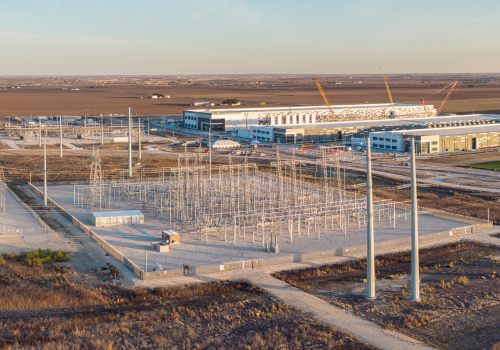
Every large AI or cloud data center campus requires new substations, transmission taps, high-capacity feeders, and local distribution upgrades. A typical hyperscale data center needs dedicated substation capacity, redundant transmission feeds, and distribution infrastructure built to utility-grade reliability. Construction packages often run to hundreds of millions of dollars and require specialty skills in high-voltage equipment installation, underground distribution, and backup power integration.
Northern Virginia, Phoenix, parts of Texas, and the Pacific Northwest are seeing clusters of data center development requiring coordinated grid expansion. For contractors, this concentration means sustained work in specific markets rather than scattered one-off projects.
Concrete Grid Portfolios That Turn Into Contractor Work
MISO Long-Range Transmission Plan – Tranche 1
MISO's Long-Range Transmission Plan Tranche 1 is a portfolio of 18 Midwest transmission projects totaling roughly $10.3 billion. These are shovel-ready projects with defined scopes, approved cost allocations, and committed timelines.
The portfolio includes new 345 kV transmission lines, substation expansions, reconductoring of existing lines, and structure replacements across multiple states. MISO's fact sheets show these 18 projects will support thousands of construction jobs during build-out, plus long-term operations and maintenance roles.
For contractors, this means multi-year commitments with predictable work schedules and opportunities to develop specialized expertise in high-voltage transmission work that commands premium rates.
Northern Virginia and Dominion's Data Center Hub
Northern Virginia has become a global data center hub, prompting Dominion Energy and regional planners to design new transmission lines, substations, and reinforcements specifically to serve multi-gigawatt data center clusters.
Each new campus translates into packages of work: greenfield substations, line extensions, underground feeders, and local distribution reinforcement. Utilities cannot afford outages, as the economic impact of downtime for AI training or cloud services is measured in millions of dollars per hour, driving specifications for redundancy and quality that surpass the typical commercial construction.
Dominion Energy is investing billions in transmission and distribution infrastructure for Northern Virginia's data center corridor, creating a pipeline of substation construction, transmission line work, and specialized underground distribution projects extending for years.
Other Regional AI-Driven Examples
ISO-New England and western utilities are proposing new 345-500 kV lines and major upgrades to handle data center and high-load industrial customers. The Pacific Northwest is planning transmission reinforcement for both data centers and new industrial loads. Texas, with available land, competitive electricity markets, and existing renewable generation, is attracting significant AI infrastructure investment requiring grid expansion.
Each regional cluster represents hundreds of millions to billions in transmission and distribution construction requiring contractors with specialized expertise.
From Capex to Jobs and Wages
Transmission, distribution, and storage employed around 1.46 million workers in 2024, with a median annual salary near $60,000 (above the national median value). The broader energy sector's median wage was nearly 19% higher than the US median, reinforcing that grid-related roles are well-paid and sustainable.
Large transmission and grid modernization portfolios support hundreds of thousands of jobs across construction, manufacturing, and professional services. MISO's LRTP Tranche 1 materials show thousands of jobs across the 18 projects during construction and hundreds of permanent positions for ongoing operations.
Supporting this wage growth is the fact that utility contractor salaries have jumped nearly 25% from 2019 to 2024. The sector's unemployment rate sits below 2%, meaning there is substantial demand for workers – boosting salaries accordingly. For example, heavy equipment operators earn $22-$38/hr. depending on experience, with annual salaries from $45,000 to $75,000. Specialized transmission line workers and substation technicians command even higher rates, particularly for high-voltage work requiring specialized certifications.
Geographic concentration in regions like Texas, the Southeast, and the Midwest creates opportunities for contractors willing to travel. States like Massachusetts, Rhode Island, and New Hampshire offer wages up to 60% above national averages for specialized utility work.
How Utility Contractors Feel the Super-Cycle on the Ground
Contractors are experiencing larger multi-year framework agreements, bigger backlogs, and increased demand for specialty skills in high-voltage line work, undergrounding, and substation construction. Utilities that historically released work project-by-project now negotiate multi-year contracts with volume commitments, providing visibility that allows for workforce planning and equipment investment.
The growth of AI, cloud computing, and the renewable transition is limited by energy availability and storage capacity.
AI and cloud infrastructure drives specific needs: high-ampacity feeders, new extra-high-voltage substations with redundant configurations, double-circuit transmission into tech hubs, and reliability-critical upgrades that carry premium rates and tight schedules. Data center developers cannot tolerate delays, as time to energization directly impacts revenue, creating pressure to accelerate construction while maintaining quality and safety.
On the point of safety, utilities insist on strong safety performance, advanced work management, and schedule reliability, encouraging contractors to retain skilled staff through better wages and benefits. Contractors who demonstrate superior safety records and reliable execution secure preferential treatment on bids.
For energy storage capacity, between 2023 and 2026, total US battery storage capacity could double to more than 40 gigawatts. Each facility requires extensive site preparation, specialized foundations, and climate-controlled structures. These tasks are precision work requiring skilled crews and specialized equipment.
Strategic Implications: Turning the Cycle Into Wage and Career Growth
10+ years of elevated utility capital expenditures also justifies investing in apprenticeships, training, and upskilling for lineworkers, substation technicians, and project managers to develop a current and future workforce pipeline. With utilities committed to over $1 trillion in planned spending through 2029, traditional reluctance to invest in workforce development no longer applies.
Contractors can use this super-cycle to boost their wages and skills, improve benefits received, and improve job security while working on important, high-impact multi-year programs. Sustained demand, labor shortages, and premium work scopes create conditions where workforce quality, skills, and experience become competitive advantages. Workers with specialized certifications in high-voltage work, underground distribution, and substation construction command premium rates.
Digital tools, such as design collaboration platforms, field data capture systems, outage modeling, create competitive advantages. Utilities continue to require real-time project tracking, digital documentation, and integration with asset management systems. Contractors who deliver these capabilities alongside quality construction secure positions on the largest, most complex projects, often at higher wages.
And safety culture remains essential. Utilities cannot afford incidents on energized infrastructure. Contractors with demonstrated safety performance, robust training programs, and cultures prioritizing incident prevention build reputations that translate into sustained partnerships.
Complex AI-driven grid projects require more than construction capability. They involve coordination with data center developers, utility planning teams, equipment manufacturers, and multiple regulatory jurisdictions.
Contractors who navigate these complexities position themselves as strategic partners rather than interchangeable bidders.
Your Role in Building the AI-Era Grid
Record 2024 capital expenditures, a $1.1 trillion-plus investment pipeline, and AI-driven load growth create a once-in-a-generation grid rebuild that cannot be delivered without contractors. Utilities planning these investments and regional transmission organizations coordinating multi-state portfolios need contractor partners who can scale to meet sustained demand while maintaining safety, quality, and reliability.
Contractor leaders should treat this as a strategic moment to grow their workforce, solidify partnerships with utilities, and position their firms as go-to partners for AI-era grid projects. Contractors who invest now in workforce development, safety culture, digital capabilities, and partnership approaches will secure their position in a market showing sustained expansion through at least 2030.
This isn't just another construction cycle. It's the rebuild of America's power infrastructure, driven by AI computing demand, renewable energy integration, and climate resilience that will define the grid for decades.
 Download the 2026 Utility Outlook
Learn how surging demand is creating unprecedented opportunities for utility contractors.
Key takeaways:
- The U.S. is launching its largest power infrastructure buildout in generations, creating major opportunities.
- Clean energy growth is driving massive construction and grid modernization investment.
- Jobs are concentrated in fast‑growing regions, with specialized skills earning top pay.
Subscribe to The Utility Expo monthly newsletter to receive more industry insights like this.