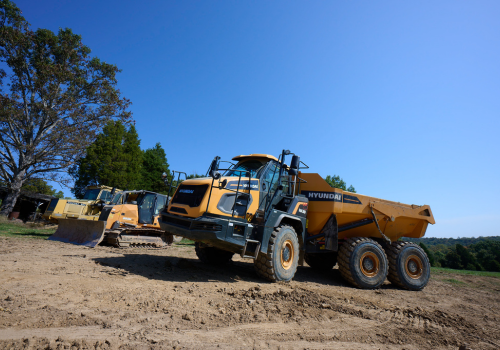
Most fleet maintenance schedules are built around a calendar. Change the oil every 250 hours, or every 90 days, whichever comes first. It is helpful to benchmark approximate maintenance timing, but failure to reevaluate based on use condition is the reason so many maintenance gaps go unnoticed until a machine fails on a jobsite where failure is expensive to fix and disruptive to a schedule. A machine that's parked for three weeks does not need the same level of attention as one that runs twelve-hour days in rugged terrain. Treating them with the same maintenance schedule is where the gap starts.
Where the Gap Starts
Repair and maintenance is the largest controllable line item in most equipment budgets. The AEMP/CFMA Heavy Equipment Comparator puts repair and maintenance at nearly 30% of total equipment cost across the industry, a figure also used to size the cost of fleet decisions made reactively. The Comparator groups utilization data (annual machine hours, idle time ratios, downtime) separately from maintenance and reliability metrics (preventive maintenance compliance, repair cost as a percentage of replacement value, mean time between failures). Most fleets track utilization and maintenance & reliability, though few connect them.
That disconnect introduces a cost leak. One contractor benchmarked against the Comparator found its maintenance spend running at 16.5% of revenue against a peer average of 12%, a gap worth roughly $1 million in avoidable annual cost. To repair the “leak,” the contractor used utilization data to direct changes to preventive schedules and replacement cycles.
How Utilization Data Can Help
Idle time ratios and machine hours are rarely used for maintenance planning. A machine sitting idle accrues depreciation and insurance costs without adding productivity. It also doesn't need the same wear-based service interval as one running full shifts. Conversely, a machine running above its planned hours approaches its next service threshold faster than the benchmark plan assumes, and that schedule will not recognize a repair need until something breaks.
Usage-based maintenance triggers, tied to actual hours and duty cycle rather than a fixed date, catch that gap before a failure occurs. The data to do this already exists in most fleets running telematics. The gap is between collecting and acting on the data before the next scheduled service window, and does not necessarily reflect an issue with the technology itself.
Why This Matters More in Utility Work
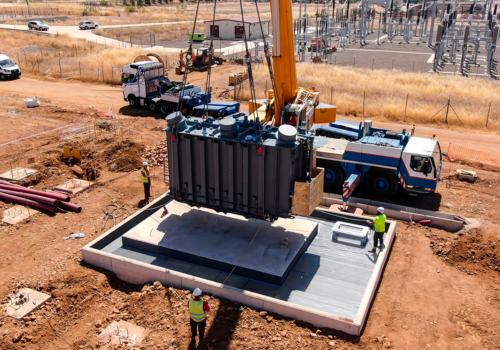
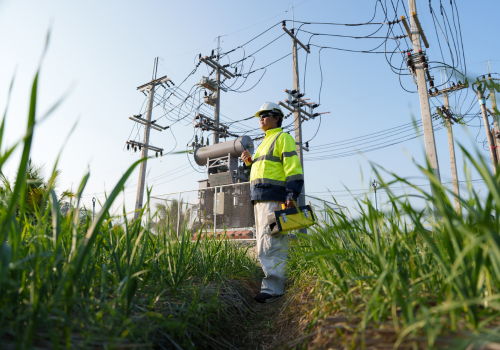
Remote site access on transmission projects adds fuel consumption and accelerates wear on undercarriage and ground-engagement equipment. Precision tolerance requirements on substation grading and battery storage foundations increase cycle times and operator demand on the machines performing the work. These elements push real heavy equipment usage further ahead of calendar assumptions than general construction, and both make a missed maintenance interval more expensive to rectify. A skipped predictive maintenance window on a machine running long days in remote terrain escalates repair cost faster than the same miss on a standard commercial job, and the consequence of an unplanned breakdown on a fixed outage window typically outweighs the repair bill itself.
Deferred maintenance compounds fastest in exactly these high-utilization environments, which is where utility programs increasingly run. Multi-year undergrounding and transmission programs keep equipment deployed longer and working harder than shorter commercial cycles ever did. Fleets that pre-position equipment for sequential project phases are designed for higher utilization. However, that advantage only holds true if the utilization data feeds into the maintenance schedule.
Closing the Gap
The good news for utilities and contractors is that using field data to optimize maintenance schedules does not require new equipment or new telematics hardware. It only requires treating utilization data as a maintenance input. Fleets that make that connection proactively catch the gap between calendar and actual wear before it shows up as an unplanned breakdown. It is a relatively easy fix in practice, but does require greater discipline (and a shift in thinking) on how fleets build maintenance schedules to begin with.
For fresh insights into the utility industry, along with trends, challenges, and shifts shaping utility work, subscribe to the Utility Expo Newsletter.
Read Next:
Tips for In-House, Dealership, and Outside Service of Fleet Maintenance | The Utility Expo
Preventative Maintenance Tips for Compact Equipment | The Utility Expo