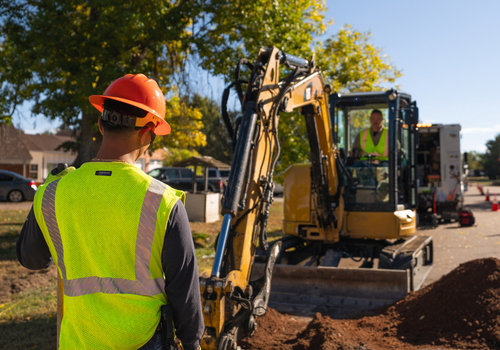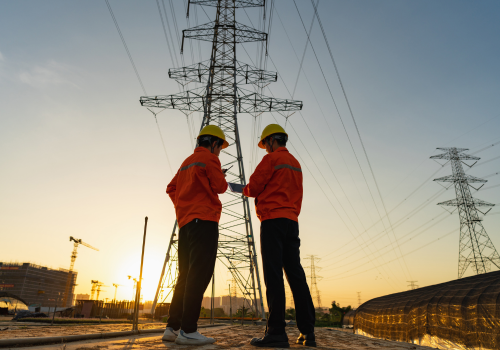
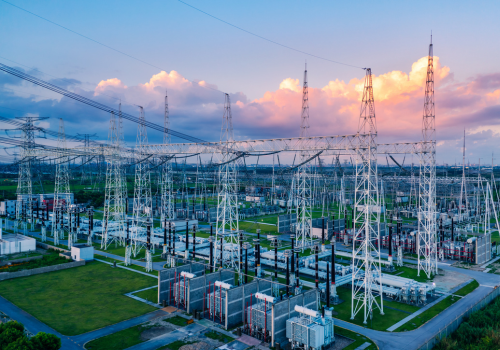
After two decades of flat electricity demand, utility construction work has come back fast. US power consumption hit a record 4,097 billion kilowatt-hours in 2024 and keeps climbing, driven by data center expansion, electrification, and industrial reshoring. Utilities are responding with capital investment approaching $174 billion annually, with 42% going to transmission and distribution alone. For utility contractors, that investment means sustained field work for those who understand what utilities actually need from the crews they hire.
Why Grid Transformation Is Driving So Much Utility Work
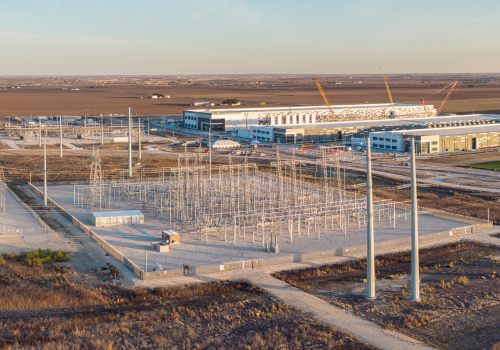
Data centers currently consume 6%–8% of total US electricity, rising to an estimated 11%–15% by 2030. Delivering that load reliably requires more than new power generation; it demands upgraded substations, expanded feeders, and distribution infrastructure that most utilities haven't touched in decades. In many regions, investment required to deliver power is now outpacing investment to generate it.
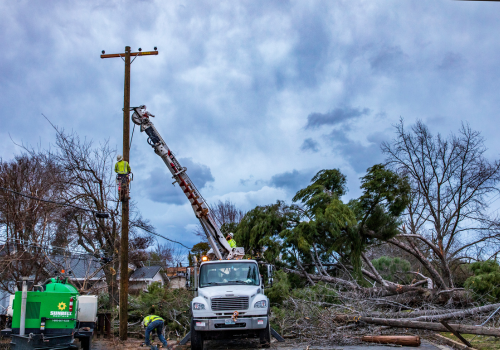
In 2024, 67% of utility T&D spending (about $63 billion) went to replacements and upgrades, not new construction. Transformers, switchgear, protection systems, and distribution lines built 40–60 years ago are being replaced under pressure from load growth and reliability mandates. Extreme weather adds urgency, as utilities have committed billions to grid hardening projects like reinforcing poles and structures, hardening substations, and converting overhead distribution lines to underground. These programs run continuously, creating a base of recurring field work that complements generation build-out.
Where to Find the Highest Concentration of Work
Roughly 34% of forecast US commercial demand growth and 69% of industrial demand growth is concentrated in four states: Arkansas, Louisiana, Oklahoma, and Texas. Texas is the single largest market, with renewables on track to surpass natural gas as the state's primary electricity source by 2025, a transition requiring transmission and distribution build-out across an expansive geography.
The Southeast is close behind, driven by data center construction and renewable energy expansion. Florida has become a proving ground for undergrounding programs, with committing $1 billion per year converting overhead laterals to underground, a model now being replicated by Duke Energy and Tampa Electric. These are examples of multi-year programs, not one-time projects.
California and the Northeast present a different opportunity, with less new generation and more grid hardening and underground conversion. PG&E is targeting 440 miles of underground line in 2026 alone as part of a 10,000-mile program. Utilities markets in states like California, New Jersey, Massachusetts, and Hawaii offer wages up to 60% above national averages, and they construct regulatory frameworks to sustain project pipelines consistently.
What Utilities Look for When Selecting Contractors
Utilities select contractors who reduce project risk, rather than awarding contracts based on equipment lists. Five capabilities consistently determine who gets called back:
- Precision and system awareness – substation grading, conduit placement, and battery storage foundations carry tight tolerances. Contractors who understand why those tolerances exist (not just what they are) make fewer costly errors and earn repeat work.
- Safety performance – working near energized equipment is non-negotiable territory. Safety records, incident rates, and crew training documentation are reviewed before contracts are awarded. Utilities share this data across procurement networks.
- Coordination and execution reliability – utility projects involve multiple trades, planned outage windows, and regulatory oversight. Contractors who can work within those constraints and document progress in real time have a clear edge.
- Technology and documentation fluency – real-time project tracking, digital work orders, and accurate as-built documentation are now standard utility expectations. Contractors who deliver these reduce change order disputes and become preferred partners.
- Workforce reliability – more than half of the current utility workforce has less than 10 years of experience. Contractors who can consistently field experienced, trained crews command better contract terms.
Certifications: The Baseline to Get Considered
These certifications are not differentiators; they are minimum entry requirements for contractors to be considered. Without them, most utility and prime contractor procurement processes will not advance the bid:
- OSHA 10 or 30-hour certification
- Specialized safety training for work near energized equipment
- First aid/CPR certification
- Equipment operator certifications (crane, aerial lift, forklift, depending on scope)
- NABCEP PV Installation Professional (PVIP) for solar-focused work
- Global Wind Organisation (GWO) Basic Safety Training for wind project crews
- State contractor licensing where required
Education: What Separates Contractors Who Win Consistent Work
Meeting certification requirements gets you considered. Three additional investments tend to separate contractors who win consistent, long-term utility relationships:
Utility Systems Knowledge
Understanding how distribution systems are designed, how power flows through a substation, and how underground conduit networks are configured changes how field decisions get made, yield fewer mistakes, and resolve punch lists faster, leading to better project outcomes. NCCER's utility infrastructure curriculum is widely recognized by prime contractors and is a practical starting point for crews transitioning into utility work.
Digital Systems Fluency
Utilities are deploying digital twin models, SCADA systems, and advanced distribution management platforms across their operations. Contractors whose crews can connect field work to those systems and provide accurate, timely documentation become preferred partners on complex projects.
Workforce Development
The construction industry needs a minimum of 500,000 additional workers in 2026 to meet project demand. Contractors who invest in training through apprenticeships, utility-sponsored on-the-job training, or trade school partnerships build a competitive advantage by stacking skills for their teams, making it hard for competition to match the breadth of their capability.
What the Work Pays
Utility contractor wages rose nearly 25% between 2019 and 2024. Sector unemployment sits below 2%, and is among the tightest in construction. Table 1 shows the current benchmarks by role:
The Utility Expo 2025 - Meeting/Function Space Fees
Solar PV Installers
> $23/hr
New Jersey (electrical contractors)
$38/hr
Wind Turbine Technicians
< $30/hr/p>
California (commercial & industrial machinery)
$48/hr
Telecom Line Installers
> $33/hr
Hawaii (construction & contractors)
$60/hr
Heavy Equipment Operators
$22–$38/hr
Massachusetts, Rhode Island, New Hampshire
$75,000/year
Excavator Operators
> $26/hr
Energy sector specialists
$41/hr ($50,000/year)
Table 1: Utility Contractor Wages by Role (Sources: AEM Utility Economic Outlook 2026 and U.S. Bureau of Labor Statistics)
Geography impacts wages significantly within those ranges. High-cost states pay up to 60% above national averages, and travel assignments in remote markets typically include a per diem payment on top of base compensation. Project durations vary, with solar installations running 6–18 months and transmission projects running longer. However, multi-year undergrounding programs now offer some of the energy sector’s most consistent long-term revenue.
Wholesale electricity prices are projected to rise roughly 19% between 2025 and 2028. Natural gas export demand is tightening the domestic supply-demand balance as new LNG terminals come online, and EIA's Short-Term Energy Outlook projects continued growth in LNG exports, accelerating utilities' business case for the build-out of infrastructure and keeping pressure on project timelines. Contractors who can adapt quickly and execute on compressed schedules are in a strong position to secure premium rates.
The Path Forward
The $174 billion in annual utility capital investment covers generation, transmission, distribution, substations, underground conversion, grid hardening, and battery storage. It is far from cyclical; it reflects a structural shift in how the US produces and moves electricity, one that will sustain field work for decades. Contractors who meet the baseline certification requirements, develop utility-specific knowledge, and can field reliable crews in high-growth markets are the ones who will win with utilities consistently.
Download the 2026 Utility Outlook
Learn how surging demand is creating unprecedented opportunities for utility contractors.
Key takeaways:
- The U.S. is launching its largest power infrastructure buildout in generations, creating major opportunities.
- Clean energy growth is driving massive construction and grid modernization investment.
- Jobs are concentrated in fast‑growing regions, with specialized skills earning top pay.
Subscribe to The Utility Expo monthly newsletter to receive more industry insights like this.
Read Next
How the $174B Grid Rebuild is Creating a Jobs Super-Cycle for Utility Contractors in the AI Era