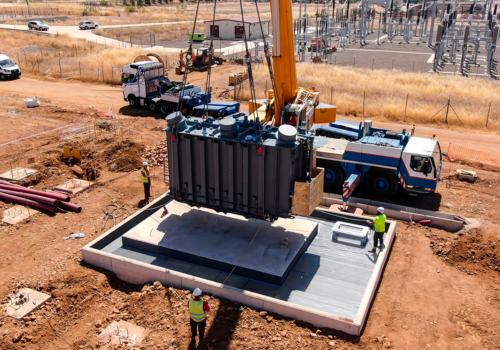
A transformer ordered today won’t show up for two to three years. Power transformers are averaging 128 weeks of lead time, and generator step-up units are running close to 144 weeks, according to Wood Mackenzie’s second-quarter 2025 survey. Medium-voltage switchgear has improved from pandemic-era peaks but still averages 26 to 32 weeks against a pre-pandemic baseline of 12 to 16. Conduit, cable, and breakers are tightening alongside them, pulled by the same demand: data center buildout driven by AI and cloud computing, grid hardening, and transmission and distribution capital spending that shows no sign of slowing.
For utility construction companies, this demand creates a scheduling problem with margin consequences attached. Procurement decisions made late, or without strategic framing, compress timelines on projects where utilities have no tolerance for delay. The companies navigating this well treat procurement as a project execution and delivery function, similar to crew scheduling and equipment readiness.
Efficiency: Where Cycle Time Becomes a Schedule Risk 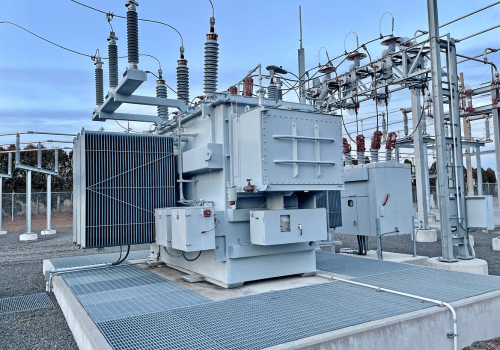
Procurement delay rarely shows up as a single dramatic miss. It appears as a slow approval chain, a purchase order issued a week later than it should have been, a sourcing decision made reactively because no one flagged the lead time early enough. On a compressed utility schedule, that week compounds. A late PO on a long-lead item doesn’t just delay one task; it pushes every downstream activity that depended on that material being on site.
The bottleneck is frequently internal, not supplier-side. Multi-layer sign-off processes built for a slower era of project delivery don’t match the velocity utilities now expect from contractors managing multi-year framework agreements. Companies that have addressed cumbersome approval processes start by mapping where approvals actually sit: who is the signature authority on a purchase order over a given dollar threshold, how long that sign-off typically takes, and whether the threshold itself still makes sense given current material costs. Streamlining that workflow and aligning roles and responsibilities, particularly for recurring items, removes friction without removing oversight.
Combining forecasting with procurement compounds the benefit. A company with real visibility into its 12-to-18-month project pipeline can place orders against future scopes before they’re formally released, locking pricing and securing production slots ahead of competitors still sourcing reactively. That visibility depends on procurement and project planning functions communicating effectively and working within each discipline’s constraints and processes. If POs are cut a specific day of the week, requests may need to be in by a certain day to provide notice. Saving days on the front end may save weeks on the back end of an order.
The companies tracking procurement performance as a project KPI, alongside schedule and safety metrics, are the ones catching cycle-time problems before they become field problems. Metrics like average days from requisition to PO, percentage of long-lead items ordered against forecast versus against confirmed scope, and on-time delivery rate by supplier are straightforward numbers most construction companies already have the data to calculate.
Standardization: Fewer Specs, Faster Execution
Every unique specification a company carries multiplies the vendors it has to manage, the approvals each purchase requires, and the quality control burden on every project. Standardizing specifications, particularly for protection systems, switchgear configurations, and conduit, reduces that complexity directly. Fewer specs mean fewer qualified vendors to vet, faster approval cycles because the engineering review has already been done once, and fewer requests for information (RFIs) and change orders downstream because field crews aren’t working from a different configuration on every job.
The standardization has to track what utilities actually specify, not what’s easiest to standardize internally. A spec library built around generic best practices risks rework. Best-in-class organizations coordinate their standard processes with the engineering requirements of their core utility relationships, then update that library as those requirements evolve.
That said, standardization has real limits in utility construction. Solar farm prep, transmission line work, underground distribution, and battery storage installation carry genuinely different material and equipment needs. A standardization framework that tries to force uniformity across project types may create the same problems it was designed to solve. The better approach treats standardization as a tool applied within a project type, with core process steps flexible enough to adapt to project requirements.
A prequalified supplier list sits underneath all of this. Utilities and prime contractors increasingly audit supplier qualification as part of their own risk management, and a prequalification process that holds up under that scrutiny, documented criteria, current certifications, verified production capacity, becomes a differentiator during bid evaluation.
Supplier Depth: Building Relationships That Outlast a Single Project
In a materials market running multi-year deficits on power transformers and persistent tightness on switchgear and breakers, the contractors with historical, mature supplier relationships are the ones who keep projects moving. A long-term agreement with a preferred vendor, built on consistent order volume and accurate forecasting, reduces price volatility and improves the odds of getting product when a competitor spot-quoting introduces delivery risk.
Those agreements work best when their terms match the duration of the program they’re supporting. A three-year underground distribution framework agreement with a utility justifies procurement terms structured around three years of volume commitments, not a series of one-off purchase orders renegotiated every quarter. Matching procurement duration to project duration gives suppliers the forecast certainty to prioritize a contractor’s orders, and gives the contractor pricing protection against a materials market that has shown sustained upward pressure since 2020.
Sourcing documentation and supply chain transparency are following the same trajectory as safety records: something utilities and prime contractors may require as a condition of award, not a nice-to-have. A procurement function that can produce clean documentation showing where materials came from, when they were ordered, and how lead times were managed has a real advantage in audit-heavy bid environments.
Power generation EPC and large industrial infrastructure sectors have operated at this scale of procurement complexity for longer than utility construction has. Their playbook (anchored by early engagement with manufacturers, capacity reservation agreements, dedicated procurement staff embedded in project planning), is directly applicable to utility construction companies scaling into larger, longer programs.
The Companies Building This Now Will Hold the Advantage
Utility capital investment isn’t slowing down, and the materials constraints driving today’s lead times aren’t resolving on a fast timeline either. The companies that build procurement capability now are best positioned to execute when competitors are still waiting on equipment they should have ordered months earlier. Efficiency, standardization, and supplier depth work together. They are how the best utility construction companies protect margin and earn the repeat work that creates a multi-year program pipeline.
For fresh insights into the utility industry, along with trends, challenges, and shifts shaping utility work, subscribe to The Utility Expo Newsletter.