Safe excavation starts before equipment moves dirt, but knowing the damage-prevention process and consistently applying it in the field can be two different things.
A new excavation safety training video from the Pipeline Association for Public Awareness, or PAPA, gives contractors and field crews a practical refresher on working safely around pipelines and other underground infrastructure. The training takes crews from submitting and verifying an 811 locate request through tolerance zones, safe excavation practices, protecting exposed utilities, emergency response, and damage reporting.
“Pipeline hits are rare — but when they do happen, they are costly — impacting lives and livelihoods,” said Kesley Tweed, executive director of the Pipeline Association for Public Awareness. “As a nonprofit, ensuring that the excavators have the information they need to dig safely near pipelines is one of our most important jobs.”
Tweed said PAPA developed the training to provide contractors with practical guidance that crews can carry directly into the field. The video is available in both English and Spanish, expanding its usefulness for contractors training crews across the industry.
“Ultimately, we want every person on the jobsite to return home safely,” Tweed said.
Watch the PAPA Excavation Safety Video and Take the Quiz
The PAPA Excavation Safety training walks contractors and field crews through planning, locating, verification, excavation near pipelines, emergency response, and damage reporting. PAPA also provides a 60-second excavation checklist and other resources crews can use in the field.
Video: Working Safely Near Pipelines: What Every Excavator Must Know
Vídeo en Español: Seguridad en Trabajos Cerca de Oleoductos: Información Esencial Para Excavadores
The video is accompanied by a quiz and other resources. After watching the video, complete the quiz for a chance to win a $500 gift card.
Turn Damage-Prevention Information Into Field Practice
Contacting 811 remains an essential first step. Contractors need to initiate the appropriate request, wait for utilities to be marked, verify those markings, and follow applicable safe-excavation practices. The PAPA training places much of its emphasis on what happens after the locate request is submitted.
Before equipment moves, crews should confirm the ticket is active and covers the entire work area and scope, verify that notified operators have responded, and compare available plans and markings with actual conditions on the jobsite. The training also covers tolerance-zone requirements, appropriate excavation methods, pipeline markers, and coordination with pipeline operators.
“The biggest disconnect is often between knowing the process and consistently following it when schedules are tight and field conditions change,” Tweed said.
That distinction is important because information alone does not prevent damage. Tweed said contractors need to translate damage-prevention information into communication, field-level training, verification, and a culture in which workers can stop work when something does not look right.
Digital tools can add information to that process, but they should not create a false sense of certainty about conditions underground.
Tweed said technology can help crews ask better questions and improve coordination, but the 811 process remains essential.
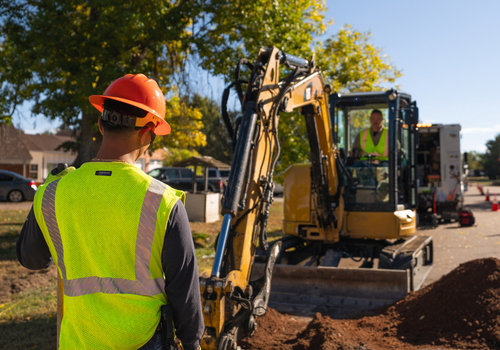
Image: A utility construction worker communicates near an excavator at an active jobsite. PAPA’s Excavation Safety training emphasizes communication, planning, and field verification before excavation begins around underground infrastructure. Photo courtesy of the Pipeline Association for Public Awareness (PAPA).
Take 60 Seconds Before Equipment Moves
One of the training's practical takeaways is a brief pre-excavation review crews can conduct before beginning work.
PAPA recommends confirming that the 811 ticket is active, valid, available on site, and appropriate for the work area and scope. Crews should verify operator responses, compare markings and visible pipeline markers with plans and actual site conditions, review applicable tolerance-zone requirements, and determine whether a pipeline operator representative is required on site.
The crew should also review emergency procedures and appropriate excavation methods before beginning work. Utilities within the tolerance zone should be safely exposed in accordance with state laws and operator requirements to verify their location and depth.
PAPA has turned those steps into a downloadable 60-second checklist that contractors can keep on their phones or print copies for field crews.
Download PAPA's Pre-Excavation Safety Checklist
When Something Doesn't Add Up, Stop
The PAPA training repeatedly cautions crews against relying on assumptions when available information conflicts with conditions in the field.
Pipeline markers, for example, indicate the general presence of underground pipeline infrastructure but do not establish its precise location or depth. Plans, historical records, GPS coordinates, and other information can provide additional context, but discrepancies need to be resolved before excavation continues.
“Stop work and resolve the discrepancy before proceeding,” Tweed said. “Recontact 811, notify the appropriate utility or pipeline operator, request clarification or a remark, and document the condition with photographs and notes.”
That stop-work principle also applies when locate markings are missing or field conditions have changed. Until the conflict is resolved and the facility's location has been safely verified, Tweed said crews should not rely on old records, GPS coordinates, pipeline markers, or assumptions.
PAPA summarizes that approach in four words: “Assume nothing, confirm everything.”
Image: Workers conduct excavation using hand tools at a utility construction site. PAPA’s Excavation Safety training highlights the importance of verifying underground facilities and using appropriate excavation practices when working within tolerance zones. Photo courtesy of the Pipeline Association for Public Awareness (PAPA).
Prepare for More Than the Dig
The training extends beyond locating and excavation to situations crews may encounter when a utility is exposed or when damage occurs.
PAPA covers protecting exposed facilities, recognizing potential pipeline releases, evacuating an area when a release is suspected, contacting emergency responders and pipeline operators, and reporting damage. The training stresses that seemingly minor contact — including damage to pipeline coatings, tracer wires, or test stations — should be reported rather than dismissed.
The broader message is that safe excavation depends on communication and shared responsibility among excavators, locators, pipeline operators, supervisors, and the people performing the work.
For contractors, that makes excavation safety more than a regulatory step before the project begins. It becomes part of how work is planned, communicated, verified, and performed throughout the job.
Put Safety and Technology to Work at The Utility Expo
Safety, underground construction, equipment, and emerging technology remain central to how utility contractors manage work in the field. The Utility Expo brings utility and construction professionals together to explore equipment, industry education, and technologies designed for the work they perform every day.
Stay up to date with Utility & Construction Trends and Technologies from The Utility Expo
The show includes hands-on equipment demonstrations and educational programming covering safety, regulatory, operational, and technology issues affecting the industry.
The Utility Expo returns Oct. 5-7, 2027, at the Kentucky Exposition Center in Louisville.
Learn more about The Utility Expo 2027 and sign up for Show Alerts
About The Utility Expo
The Utility Expo is the premier trade show for utility construction and infrastructure professionals working to build, maintain and modernize essential utility systems. The biennial event brings together contractors, utility owners and industry leaders for hands-on access to the latest equipment, tools, technologies and solutions serving transmission and distribution of all sources, water, wastewater, telecom and other critical utility markets. Known for equipment test drives and interactive product demonstrations, The Utility Expo will return to Louisville, Kentucky, October 5-7, 2027.