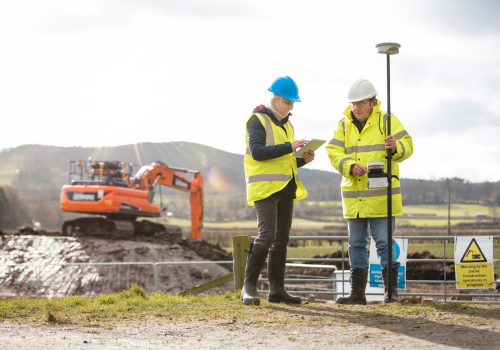
Utility contractors have more information available to them than ever before. Geographic Information Systems (GIS) can map existing infrastructure. Global Navigation Satellite System (GNSS) and GPS-enabled equipment can establish precise locations in the field. Telematics can track equipment utilization, while mobile applications can document inspections, photographs, progress, and site conditions.
The challenge is not collecting information. It's making sure project data gets to the people who need it.
Estimators, project managers, superintendents, operators, and locators all rely on accurate information to do their jobs. When utility records, design revisions, field notes, and project updates become disconnected, delays, rework, and mistakes become more likely.
Good information flow helps crews work from current plans, document field conditions, and avoid preventable rework.
Know the Site
For utility construction, connection begins with understanding what is already underground.
Existing utility information can come from records, maps, surveys, locating, geophysical investigations, and field observations. Each source can add another layer of information about site conditions, but records and field conditions do not always align.
That makes verification an important part of planning. Combining available records with locating, surveying, and field observations can give project teams a clearer picture of existing infrastructure before excavation begins. Better information can help identify potential conflicts earlier, coordinate work, and determine where additional investigation may be necessary.
Damage data illustrates the stakes. According to the Common Ground Alliance’s 2025 Damage Information Reporting Tool report, locating practices accounted for 37.9% of reported damage root causes among organizations that consistently reported data from 2023 through 2025. The findings underscore why contractors need reliable information about existing infrastructure — and why that information needs to reach the people performing the work.
Knowing what is underground, however, is only the beginning. For contractors, the next challenge is getting that information to the people who need it in the field.
Connect the Work
Utility projects generate information from many sources, including design files, utility records, positioning systems, inspections, equipment data, photographs, and field reports. When those systems don't communicate, project teams can end up working from different versions of the same project.
For many contractors, the challenge is keeping field and office teams working from the same information. Utility records gathered during planning should be available to locators and excavation crews. Design revisions need to reach operators before work begins. Inspection records, photographs, and field observations should be accessible to project managers tracking progress and resolving issues.
A revised drawing sitting on an office computer does little good if crews are working from yesterday's information. Likewise, an unexpected utility conflict discovered in the field has limited value if it remains trapped in a notebook, text message, or disconnected application.
The technology itself is only part of the equation. The bigger challenge is making sure information moves to the people who need it while decisions can still be made.
Capture What Changes
Construction does more than change the jobsite. It also creates information.
Crews expose existing utilities, adjust alignments, install new infrastructure, take measurements, perform inspections, and encounter conditions that may differ from plans. Each change can add useful information to the project record.
Connected field technology makes it possible to capture those details while the work is happening. GNSS receivers, GIS applications, mobile devices, digital forms, and photographs can document what crews find, what they install, and where the work takes place.
Instead of reconstructing those details during project closeout, contractors can build the record as construction progresses. Location data can be paired with photographs, measurements, inspection records, installation details, and field notes, creating a more complete picture of what was installed and where.
That can make the as-built a continuing process rather than simply an end-of-project exercise. When field updates flow back into GIS or project-management systems, information collected at the jobsite can become available to project managers, owners, and other teams that need it.
For utility contractors, there is a practical advantage to capturing accurate information while the pipe, conduit, cable, or structure is still exposed.
Once the trench is closed, recreating that information becomes considerably more difficult.
Use the Information
The final step is turning connected information into decisions.
Telematics can help contractors understand equipment utilization, operating hours, idle time, and maintenance needs. Production information can help project managers compare field progress with plans. Digital documentation can support quality control and closeout. GIS and as-built records can provide owners with better information for preventive maintenance, future expansion, and future excavation.
Information captured on today's project can remain valuable long after construction is complete. The challenge is keeping that information accessible and useful as it moves from planning and construction to future operations and maintenance.
When project teams can work from the same information, they spend less time chasing answers and more time getting work done.
Join thousands of industry peers who receive utility construction industry news and trends each week. Subscribe to The Utility Expo Newsletter.
Read Next
Mental Health Strategies for Utility Workers | The Utility Expo